


Power Assist Wheelchair Guide: What Experts Won't Tell You
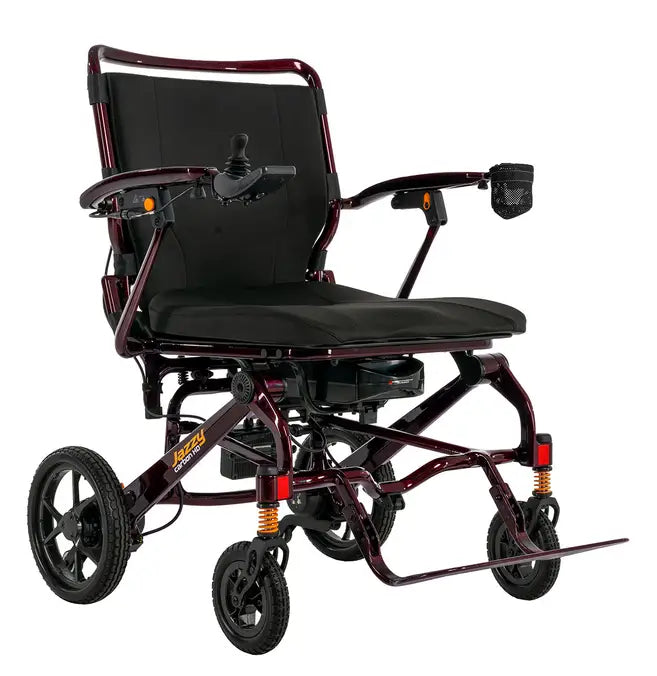
Additionally, users transitioning between standard wheelchairs and power assist models often discover significant differences in handling, accessibility, and legal classifications. Wheelchair cushions, lightweight wheelchair options, and companion wheelchair variations all interact differently with power assist technology, creating a complex decision matrix for potential buyers. Most importantly, understanding these nuances before investing can save you thousands of dollars and countless hours of frustration.
This comprehensive guide cuts through the marketing hype to deliver practical insights about power assist wheelchairs—covering everything from technical specifications and legal considerations to real-world usage scenarios and maintenance requirements that dealers rarely discuss upfront.
Understanding Power Assist Devices
What is a power assist wheelchair?
Power assist devices serve as attachments that enhance the propulsion of manual wheelchairs, significantly reducing the effort required to move. These innovative mobility solutions provide a controlled boost while maintaining the compact footprint of a manual wheelchair [1].
The fundamental purpose of Power Wheelchair assist technology is to offer assistance to individuals who want to retain some manual control but need help with fatigue, steep inclines, or covering longer distances [1]. These devices generally operate through sensors that detect when you push the wheelchair, then activate motors to provide proportional assistance based on your input.
Key Benefits of Power Assist Technology:
-
Maintains the option to self-propel with reduced physical strain
-
Increases independence and travel distance capabilities
-
Preserves joint health by reducing repetitive stress injuries
-
Allows flexibility to switch between manual and powered movement
-
Generally costs less than a full power wheelchair [1]
How it differs from manual and power wheelchairs
Manual wheelchairs require complete physical exertion from the user or an attendant for movement. In contrast, power wheelchairs operate entirely through electric motors controlled by joysticks, offering mobility with minimal physical effort [2].
Power assist devices occupy the middle ground between these options. Unlike full power wheelchairs, these systems only activate when you initiate movement, giving you complete control over steering and braking while simply enhancing each push [3]. This means you never deal with joystick input for basic movement or a chair that moves independently [3].
Furthermore, power assist models offer unique advantages over standard power wheelchairs:
First, most power assist systems can be removed from the manual wheelchair to allow for easier transportation in standard vehicles [4]. This differs from power wheelchairs which often require wheelchair-accessible vehicles for transport [4].
Second, while power wheelchairs usually include suspension systems for better ride quality, power assist devices maintain the more compact profile of manual chairs [4]. Therefore, the choice between them often depends on whether ride comfort or portability is more important to the user.
Common types of power assist add-ons
The market offers several distinct categories of power assist technologies, each with specific applications and benefits:
1. Hub-Mounted/Wheel Add-Ons: These replace standard rear wheels with motorized versions containing batteries and motors built directly into the wheel hubs [5]. They activate when force is applied to the pushrims, making every push more powerful without changing your propulsion technique [5]. While they add weight (up to 22 pounds per wheel) [5], they maintain familiar wheelchair dimensions and handling.
2. Rear-Mounted Push Devices: These lightweight units clamp onto the wheelchair frame and "push" the chair forward [3]. They're typically controlled via hand controller mounted on the side rail and excel on hard surfaces but may lose traction on soft terrain like grass [3]. These are among the easiest power assist devices to attach and remove [3].
3. Front-Mounted Pull Devices: These attach to the front of the wheelchair, lifting the casters to create a "trike-style" configuration [5]. They handle rough terrain exceptionally well but add length to the chair, potentially making tight spaces more challenging to navigate [5].
4. Caregiver Assist Options: Specifically designed for attendants, these devices reduce the effort needed to push someone else's wheelchair [1]. Models like the Enjo allow caregivers to manage hills and long journeys with less physical strain [1].
Consequently, selecting the right power assist technology requires careful consideration of your mobility needs, environment, and physical capabilities.
ADA definitions and classifications
The U.S. Department of Justice established clear definitions for mobility devices through amendments to the Americans with Disabilities Act (ADA). According to these regulations, mobility devices fall into two primary categories:
Wheelchairs are defined as "manually-operated or power-driven devices designed primarily for use by an individual with a mobility disability for the main purpose of indoor or of both indoor and outdoor locomotion" [1]. Most power assist wheelchair systems fall within this classification since they're specifically designed for individuals with mobility disabilities.
Other Power-Driven Mobility Devices (OPDMDs) encompass "any mobility device powered by batteries, fuel, or other engines that is used by individuals with mobility disabilities for the purpose of locomotion" [1]. This includes devices like Segways, golf carts, and other powered options not primarily designed for people with disabilities.
This distinction matters because each category receives different levels of access protection under federal law. Power assist wheelchairs typically receive the strongest protections as they're classified under the wheelchair category.
Where power assist devices are allowed
The legal framework creates a clear hierarchy of access rights based on device classification:
Power assist wheelchairs classified as "wheelchairs" must be permitted in all areas where members of the public are allowed to go [1]. This applies to both government facilities (Title II) and businesses serving the public (Title III).
For devices classified as OPDMDs, facilities must allow them unless they cannot be accommodated due to legitimate safety requirements [6]. However, such safety requirements must be based on actual risks—not speculation or stereotypes about particular devices [1].
Facilities evaluate OPDMD accommodation based on five factors:
-
Device specifications (type, size, weight, dimensions, speed)
-
Pedestrian traffic volume
-
Facility design characteristics
-
Legitimate safety requirements
-
Environmental impact concerns [1]
Notably, facilities are not required to retrofit their spaces to accommodate larger or heavier mobility devices [7].
Credible assurance and user rights
If someone enters a facility using a power assist wheelchair or OPDMD, staff may request "credible assurance" that the device is being used because of a mobility disability [1].
Acceptable forms of credible assurance include:
-
A valid, state-issued disability parking placard or card
-
Any state-issued proof of disability
-
A verbal statement that the mobility device is required due to disability [7]
Importantly, staff may not question the nature or extent of someone's disability [7]. Moreover, the fact that a person can walk short distances does not invalidate their need for a mobility device for longer distances or uneven terrain [1].
People with disabilities maintain the right to choose whatever mobility device best suits their needs [1]. This means users have the freedom to select a power assist wheelchair based on their specific requirements without justifying their choice to facility operators.
Throughout these considerations, remember that properly configured power assist wheelchairs enable independence in diverse environments. Hence, understanding these legal frameworks helps ensure your rights are protected as you navigate public and private spaces with your mobility device.
Key Factors to Evaluate Before Buying
Selecting the right power assist device requires careful consideration of several practical aspects beyond basic functionality. Examining these critical factors first will save you time, money, and potential disappointment.
Weight and portability
The weight of your power assist device directly impacts transportability and everyday usability. Push devices typically weigh 13-17 pounds, making them the lightest option available [3]. Some models, like the SmartDrive, weigh just 13.2 pounds [8]. Front-mounted pull devices tend to be heavier and bulkier [3], although the F35 stands out as the lightest in its class.
For frequent travelers, consider whether the device is easily removable and whether components can be separated for transport. Many models feature compact designs specifically for transportation and storage [9].
Battery life and charging time
Battery performance varies dramatically between models. Standard ranges typically span 10-20 miles per charge [10], though some models like the StreetJet can travel up to 31 miles on a single charge [11]. The R90 offers two battery options: a standard battery with a 9.8-mile range and an extended battery covering up to 19.5 miles [2].
Charging time also differs by battery type—lead-acid batteries typically require 8-14 hours [12], whereas lithium-ion batteries need only 2-6 hours [13]. The R90 specifically requires approximately 1 hour for its standard battery and 2 hours for the extended version [14].
Ease of attachment and detachment
The attachment mechanism significantly affects daily usability. Push devices are typically the easiest to attach and remove [3]. Many models feature quick-release systems like the patent-pending V-Lock on the R90, which securely docks to a receiver on the chair [2].
Consider whether you have the necessary range of motion, motor control, and strength to connect or remove the device independently [3].
Compatibility with existing wheelchair
Not all power assist devices work with all wheelchairs. Some require specific frame types or reinforcement packages to handle increased forces and velocity [15]. Wheel add-ons typically mount to the wheelchair's camber tube to prevent adding width [3].
Always verify that brackets, axle types, and frame clearances accommodate your specific chair without compromising balance [16].
Maintenance and repair support
Regular maintenance keeps your power assist device functioning optimally. In a 2017 survey, 56% of power wheelchair users reported parts breaking or malfunctioning [17].
Check whether manufacturers offer accessible repair services—some providers like Numotion offer in-shop services at branches nationwide [18], while others provide at-home service throughout the contiguous United States [19]. Also consider whether loaner equipment is available during repairs..
Speed and maneuverability in crowded areas
Power assist wheelchairs typically travel between 2.5-4 mph [4], offering a pace suitable for navigating alongside pedestrians. The Pride Mobility Go Chair reaches speeds up to 3.7 mph [20], providing adequate momentum without posing safety risks in crowded settings.
Maneuvering in tight spaces requires strategic navigation techniques. Power assist devices that don't increase overall wheelchair dimensions (like hub-mounted options) preserve indoor maneuverability [11]. Alternatively, front-mounted systems may increase the wheelchair's length, potentially complicating navigation in confined spaces despite their superior outdoor performance [11].
For especially narrow passages, practicing the three-point wheelchair turning technique helps maintain control—involving reversing in an arc, turning opposite, then reversing again to complete the turn [21].
Balancing safety with user independence
In fact, the most successful approaches balance legitimate safety concerns with preserving user autonomy. Reasonable modifications to policies should allow OPDMD use by individuals with mobility disabilities unless a facility can document specific safety risks [27]. Yet even when particular device types cannot be accommodated, organizations should seek alternative ways to provide accessibility to the greatest extent possible [28].
References
[1] - https://www.ada.gov/resources/opdmds/
[2] - https://www.sunrisemedical.com/power-assist/empulse/add-on-devices/r90
[3] - https://www.sunrisemedical.com/education-in-motion/resources/manual-mobility/choosing-your-optimal-power-assist-device
[4] - https://danetechnologies.com/wheelchair-solutions/wheelchair-mover/
[5] - https://hub.permobil.com/blog/power-assist-devices-choose-what-works-for-you
[6] - https://adata.org/power-driven-mobility-devices
[7] - https://www.ada.gov/topics/mobility-devices/
[8] - https://hub.permobil.com/smartdrive
[9] - https://www.gilaniengineering.com.au/what-is-a-power-assist-wheelchair/
[10] - https://www.intcowheelchair.com/news/how-to-choose-the-best-power-wheelchair-features-battery-life-more
[11] - https://www.sunrisemedical.com/LiveQuickie/Blog/September-2025/How-to-Choose-the-Right-Power-Assist-Device
[12] - https://www.quantumrehab.com/resources/consumer-article-how-to-charge-your-power-wheelchair-batteries.asp
[13] - https://www.1800wheelchair.com/news/how-long-does-it-take-to-fully-charge-an-electric-wheelchair/?srsltid=AfmBOooaLuMUn-kvGtbz9nMICQmYyPwtV7s0L2DvE1tIvaTggS0j1YJG
[14] - https://www.sunrisemedical.com/support/faqs/power-assist/r90/all/r90charge
[15] - https://blog.gtk.com.au/power-assist-wheelchair-options
[16] - https://www.rollinginparadise.com/post/the-ultimate-guide-to-power-assist-wheelchairs-benefits-features-and-choosing-the-right-model
[17] - https://hub.permobil.com/blog/power-wheelchair-maintenance
[18] - https://www.numotion.com/in-shop-service
[19] - https://www.dynamicrepairsolutions.com/
[20] - https://www.pridemobility.com/wheelchairs/power-assist-wheelchairs.asp
[21] - https://www.redmanpowerchair.com/navigating-public-spaces-with-a-power-chair/
[22] - https://www.mobilitypluscolorado.com/blog/how-to-transport-electric-wheelchair
[23] - https://www.rollinginparadise.com/post/can-you-travel-with-a-power-assist-wheelchair-add-on-tips-tsa-rules
[24] - https://www.transportation.gov/resources/individuals/aviation-consumer-protection/assistive-device-guides/assistive-device-stowage
[25] - https://www.iata.org/contentassets/6fea26dd84d24b26a7a1fd5788561d6e/mobility-aid-guidance-document.pdf
[26] - https://www.adatitleiii.com/2014/03/justice-department-issues-new-guidance-on-the-use-of-other-power-driven-mobility-devices-by-individuals-with-mobility-disabilities/
[27] - https://www.americantrails.org/resources/basic-facts-on-department-of-justice-rule-on-power-driven-mobility-devices-for-accessibility
[28] - https://www.lawandtheworkplace.com/2014/01/doj-releases-updated-guidance-on-wheelchairs-mobility-aids-and-other-power-driven-mobility-devices/
0 comments